

The ENVGO founding team: the engineers behind Canada's largest autonomous systems exit are reinventing marine technology

From left to right: Jerry Mailloux, April Blaylock, Mike Peasgood, MIike Tribou, Pete Keller, Paul Masojc
ENVGO was founded in 2021. The experience behind it spans nearly two decades.
When evaluating a deep-tech company, the founding team is the investment. ENVGO was founded in 2021, but its co-founders have been building autonomous systems together for nearly two decades. They came together to transform a marine industry that is roughly twenty years behind automotive in electrification, performance, and autonomy, drawing on the same expertise that built Aeryon Labs from a Waterloo research lab into a globally deployed product trusted by militaries and governments across 35+ markets. They did it once, in the air. Now they are doing it on the water.
Their previous company, Aeryon Labs, was acquired by FLIR Systems in January 2019 for over $200 million USD, which remains the largest VC-backed defence startup exit in Canada. They didn't scatter. They formed ENVGO with a deliberate thesis: the hardest problems in autonomous mobility had been solved in the air, and the marine industry, comparatively starved of that investment and R&D, was where those solutions belonged next. This is a closer look at who they are, and why that thesis holds.
One Team. One Prior Exit. A Repeatable Thesis.
Aeryon Labs was founded in 2007 in Waterloo, Ontario. Over the next twelve years, its unmanned aerial systems became trusted tools for militaries, police forces, and emergency response agencies across more than 35 markets worldwide, deployed by 20 militaries including the US Department of Defense, and by Canadian police services for missions ranging from missing persons searches to disaster relief. The company became one of Canada's most recognized names in autonomous aviation. In 2024 the Canadian government donated 800 of their SkyRanger drones to Ukraine.
The acquisition by FLIR Systems for $200 million USD validated more than a financial return. It proved that a small team out of Waterloo could build safety-critical autonomous systems trusted by the most demanding operators in the world, scale them across 35+ markets, and exit to a global leader in sensing technology. That is the playbook ENVGO is running again.
ENVGO was not founded by people who just met at Aeryon. It was founded by the core engineering and commercial leadership that built Aeryon's products, grew its markets, and executed the exit. ENVGO’s CEO and founder, Dr. Mike Peasgood was one of the 3 co-founders at Aeryon Labs.
The thesis at ENVGO is structurally identical: identify a complex autonomous systems problem the market hasn't solved, build the team to solve it at the highest technical level, deploy it into the markets where the team already has relationships. The challenge this time is to bring the marine industry into the 21st century, making it efficient, safe, and autonomous.
The Founding Team at a Glance
● Two Ph.D.s in control systems and robotics from the University of Waterloo
● Five founders with University of Waterloo connections, home of one of Canada's foremost engineering and deep-tech ecosystems
● 2 former BlackBerry senior leaders, including Senior Business Development, Global Strategic Alliances
● Close to two decades building, deploying, and scaling autonomous systems together
● Aeryon Labs: products deployed in 35+ markets, trusted by 20 militaries including the US Department of Defense
● $200 million USD prior exit = Canada's largest VC-backed startup exit at the time
● Current investors: Two Small Fish Ventures, Garage Capital, Graphite Ventures
● Defence expansion underway: XV2, a 2-meter micro-USV in development for Canadian sovereign defence requirements
Meet the Founders
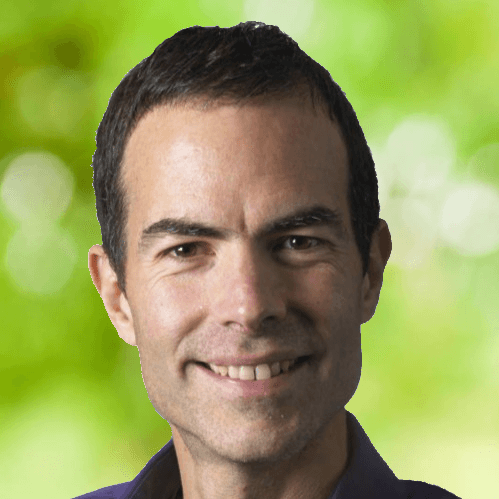
Mike Peasgood — Chief Executive Officer
Mike Peasgood's career has one consistent thread: a fascination with how to make autonomous vehicles and the control systems required to tame them. He grew up sailing, learning early the discipline of managing a vessel that wants to tip the moment you stop correcting for it. At the University of Waterloo, he formalized that instinct into three consecutive degrees in Systems Design
Engineering: a BASc (1998), an MASc (2004), and a Ph.D. (2008), with graduate research focused on mobile robotics and real-time control systems. In 2007, Mike co-founded Aeryon Labs with fellow Waterloo researchers. As CTO, he helped build it over twelve years from a university research project into a globally deployed unmanned aerial systems company, and through the $200 million acquisition by FLIR Systems in 2019. He then assembled some of the key people from Aeryon and founded ENVGO, applying the same control theory to a new domain. His framing of the core challenge is precise:
"It's not a marine design challenge. It's an aerospace design challenge."
That observation - that a hydrofoiling boat is an unstable flight vehicle requiring drone-grade active control - is the technical foundation the entire company rests on.
A CEO who holds a Ph.D. in the exact engineering discipline underpinning the product, has co-founded and exited a company in an adjacent domain, and can credibly articulate the technical thesis to investors, customers, and engineers is not common. Mike is all three.
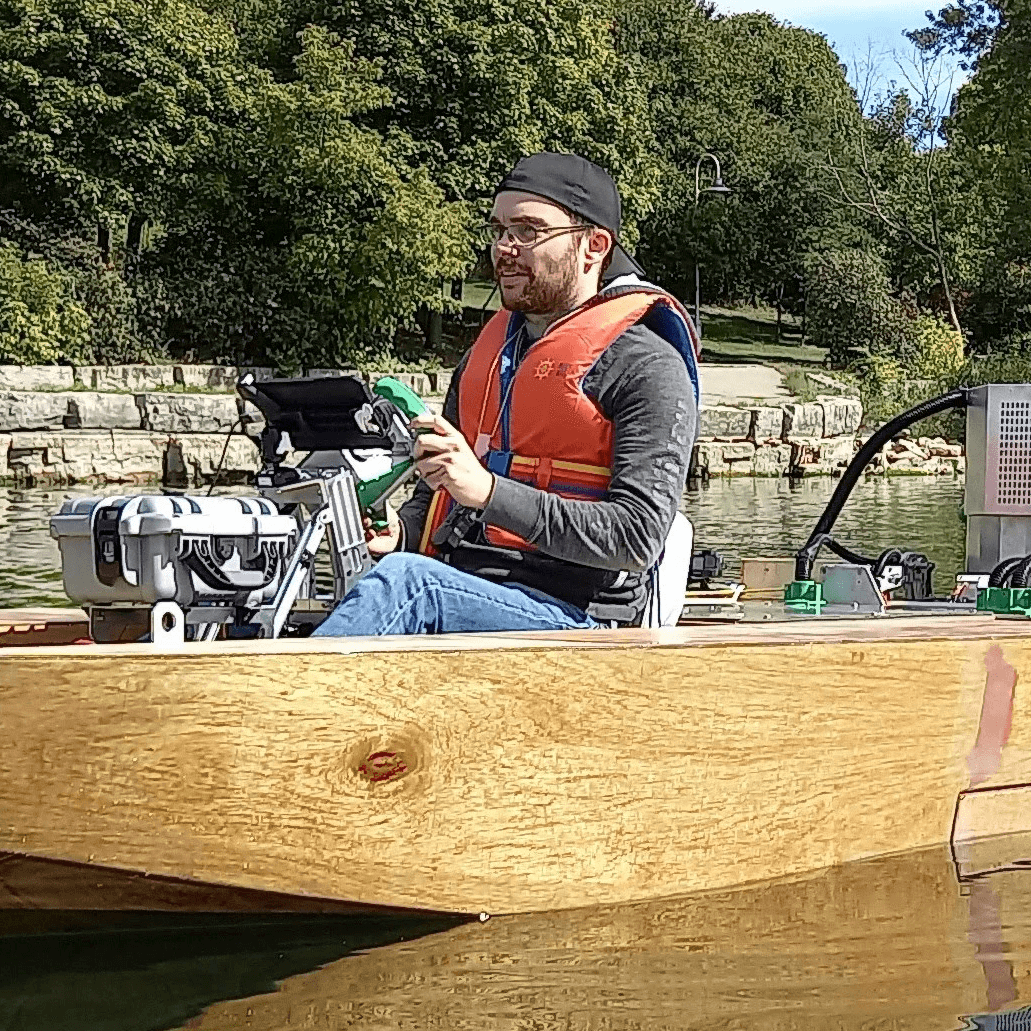
Mike Tribou — Chief Technology Officer
ENVGO's technical architecture is built on two Ph.D.s. Mike Tribou's doctorate in Systems and Control Engineering from the University of Waterloo put him at the mathematical frontier of autonomous flight stability. At Aeryon Labs, he translated that academic grounding into deployed flight control software running in real-world conditions: dust, wind, communication interference, contested environments. After the FLIR acquisition, he continued as a flight and gimbal control architect at Teledyne FLIR, refining stabilization systems in active deployment.
At ENVGO, Mike's architecture underpins NV1's 250 data reads and 50+ foil adjustments per second. Precision, in real time. Active foil control — the core technical IP that keeps the world's first performance-class electric hydrofoiling boat stable at 80 kph. He is now extending that stack to XV2, ENVGO's 2-metre unmanned surface vessel for Canadian sovereign defence applications.
Why it matters for ENVGO: The company’s competitive moat is not its hull or its battery; it's the flight control software. Mike Tribou wrote the equivalent system for Aeryon for over a decade. He is not adapting; he is applying mastered expertise to a new medium.
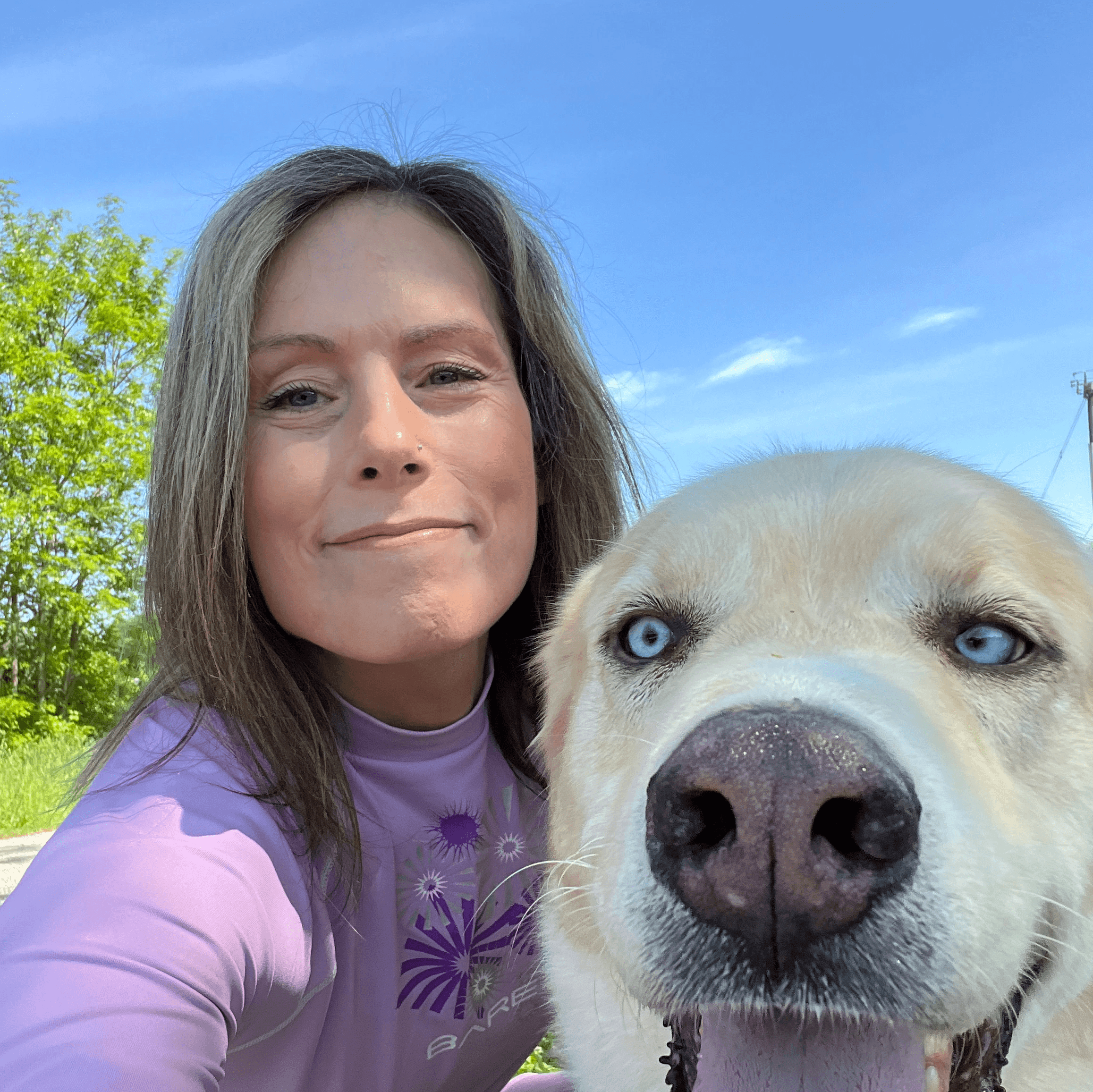
April Blaylock — Principal AI Systems Architect
Every autonomous vehicle needs to perceive its environment, and April Blaylock has spent her career building the systems to do just that. At Aeryon Labs and subsequently FLIR, she worked as a vision systems architect and senior UAS engineer, developing the image-processing and robotics pipelines that gave Aeryon’s aircraft real-time situational awareness in operational conditions. She later served as an Autonomous Systems Architect at TuSimple, where she contributed to the architecture of perception and autonomy systems for self-driving trucks. April holds a Masters in Engineering from Waterloo University and an MBA from Sir Wilfrid Laurier University, combining deep technical expertise
with the commercial discipline required to build AI systems as products, not prototypes.
At ENVGO, April leads the perception and AI architecture behind the company’s camera array and GPU-based perception stack, responsible for real-time obstacle detection, vessel identification, sensor fusion, and autonomous path planning. She is building the AI-native platform that will differentiate ENVGO's autonomous marine vessels from any hardware-only competitor across both the
recreational and defence product roadmap.
Why it matters for ENVGO: Long-term defensibility in autonomous marine vehicles will be won on AI and perception, not hull design. April's background building operational AI perception systems for defence-grade UAS is directly transferable and rare outside aerospace.
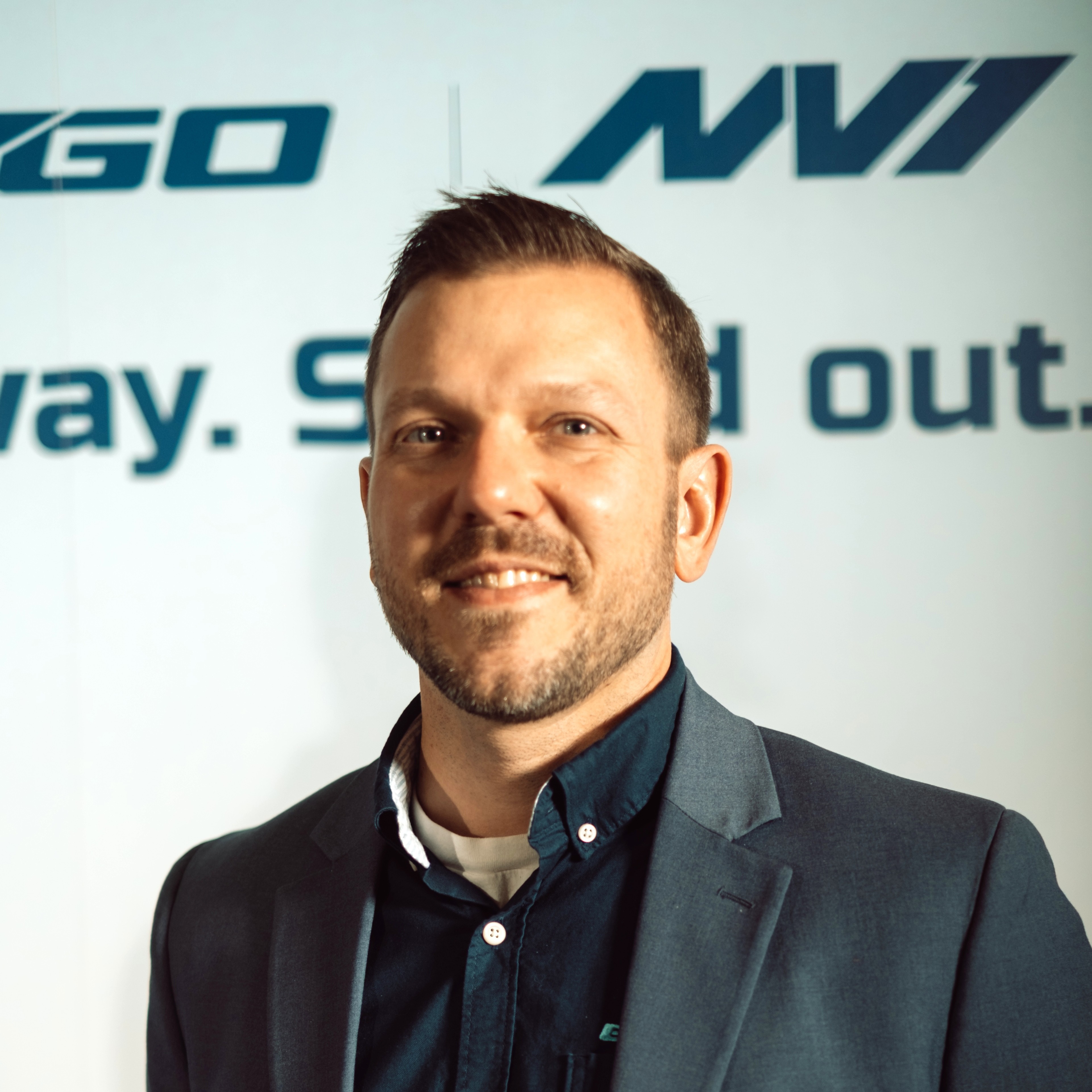
Paul Masojc — Chief Operating Officer
Autonomous systems companies often fail not because their technology doesn't work but because they cannot build, source, and deliver it at scale. Paul Masojc is the reason that supply chain is not ENVGO's problem. With a Mechanical Engineering degree from the University of Waterloo (2005) and a career spanning engineering leadership at Aeryon Labs, supply chain and operations at FLIR Systems, and operational scale at BlackBerry, Paul has direct, proven experience doing what most hardware startups find hardest: translating a prototype built in a lab into a product that ships reliably, on time, to demanding customers.
Why it matters for ENVGO: Hardware deeptech has a well-documented graveyard of technically brilliant companies that failed to manufacture at scale. Paul's specific combination of hardware engineering depth and large-scale operations experience directly addresses this risk.
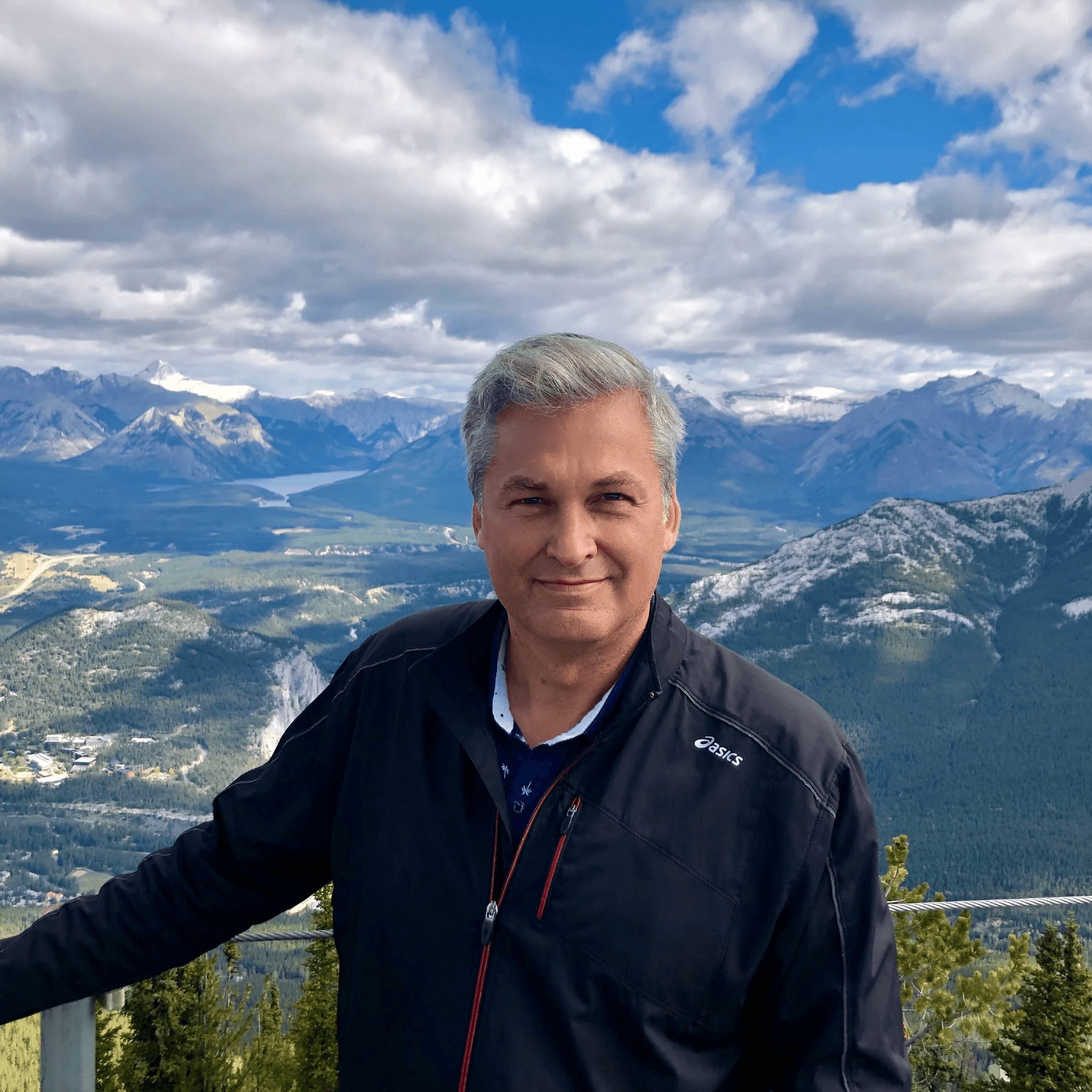
Pete Keller — VP, Sales & Business Development
Pete Keller was a key contributor to Aeryon Labs' commercial success from its early formative years through acquisition, leading sales and business development across Europe and Asia while building and managing regional sales teams and channel partner networks. He helped grow the company from a Waterloo startup into a globally trusted UAS provider serving defence forces, police services, and commercial operators in more than 35 countries, including direct relationships with over 20 military organizations. Following Aeryon's $200 million acquisition, Pete continued as Vice President of
International Sales at FLIR, where his international leadership responsibilities expanded to include more than 20 additional countries. Prior to Aeryon, Pete spent several years at BlackBerry in global strategic alliances roles, focusing on building and managing strategic partnerships with organizations around the world. The experience provided a strong foundation in developing international business relationships and leading collaborative growth initiatives.
At ENVGO, Pete leads global business development with a proven ability to build trusted relationships across government, defence, and commercial sectors. Drawing on years of bringing emerging technologies to market, he excels at identifying and connecting with the right partners, customers, and decision-makers to accelerate growth and market adoption.
Why it matters for ENVGO: Government and defence sales cycles are long, relationship-driven, and nearly impossible to accelerate without an insider track. Pete helped build Aeryon's defence business across 35+ markets. The XV2's defence expansion is going into markets where Pete already has relationships — not ones he is entering cold.
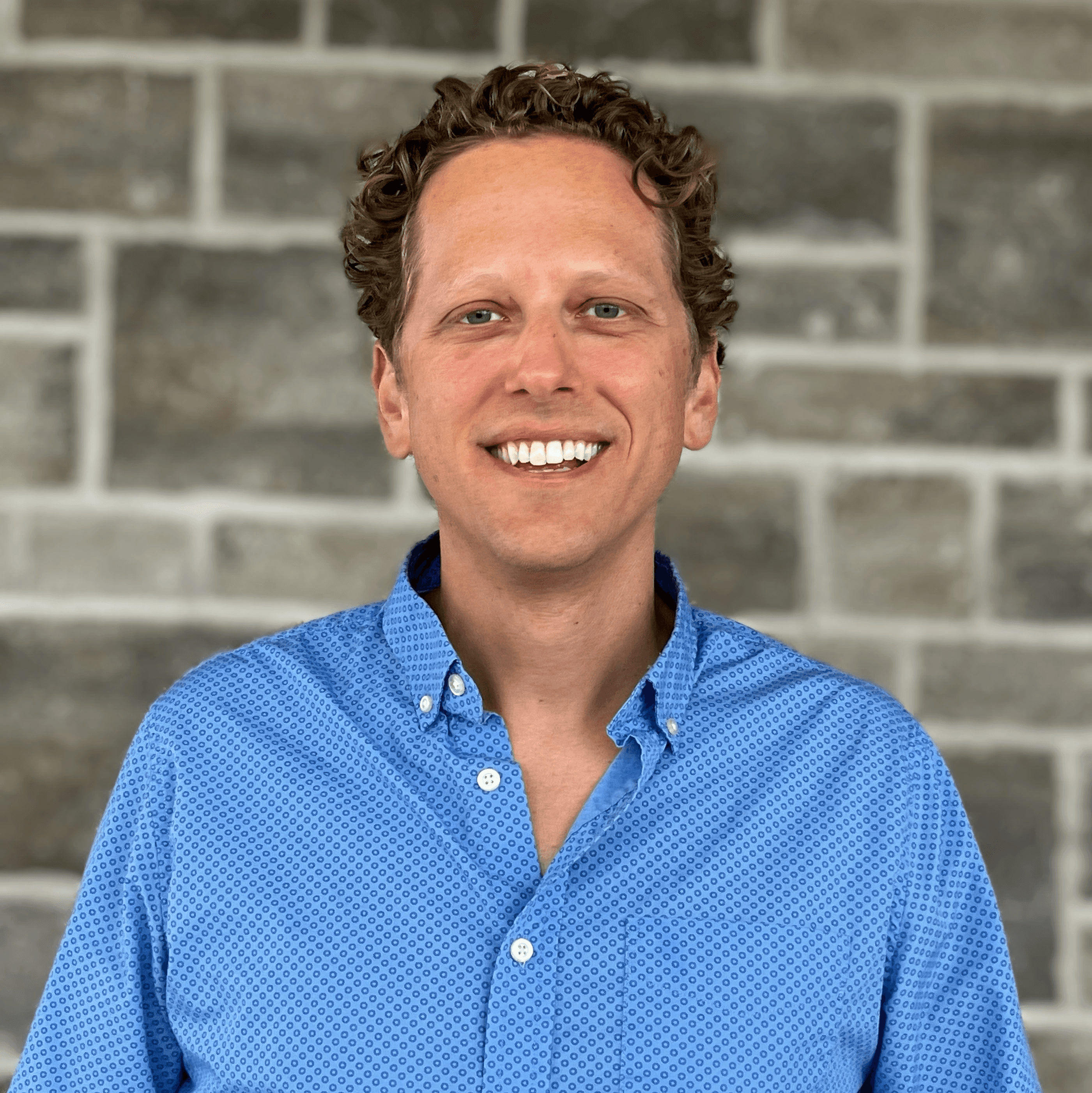
Jerry Mailloux — VP, Engineering
Building autonomous high-speed vehicles in open water demands qualities that rarely coexist: large-system engineering discipline, startup-speed execution, and domain-specific expertise in autonomous systems. Jerry Mailloux has all three, in sequence. He is a University of Waterloo graduate who spent 14 years at BlackBerry before joining Aeryon Labs as Director of Engineering, leading the engineering teams that built the technology behind Aeryon's deployed drones.
At ENVGO, Jerry leads the engineering team building NV1 and XV2 as well as designing the electrical system for the vessels and developing the embedded software that seamlessly integrates all systems together such that the vessel just works.
Why it matters for ENVGO: ENVGO is moving from a single recreational product to a dual-market platform (recreational + defence). Scaling engineering to support that roadmap requires exactly the combination Jerry brings: large-org engineering process from BlackBerry, and autonomous systems domain expertise from Aeryon.
Why This Team Has a Structural Advantage in Marine Autonomy
Most marine companies are started by marine professionals. ENVGO was started by autonomous systems engineers who happen to identify a boat efficiency and mobility problem. That distinction matters more than it might seem. The fundamental technical challenge in building a high-performance autonomous marine vehicle is not hull design or propulsion - it is control theory, sensor fusion, and real-time perception. These are the same problems that have been at the centre of the drone and autonomous vehicle industries for the past two decades. The marine industry has had a fraction of that investment and engineering expertise. The gap is structural: the drone industry was driven by defence procurement and venture capital at a scale that the recreational and commercial marine industries simply did not attract.
ENVGO's founding team spent those two decades on the other side of that gap: building, deploying, and scaling autonomous systems for the most operationally demanding environments in the world. They have already solved the hard problems: flight control under turbulence, real-time perception in field conditions, sensor fusion for safety-critical applications in aerospace, which has far less tolerance for failure than recreational marine. Porting those solved problems into a new medium is ENVGO's foundational thesis, and it is the same thesis that produced the $200 million Aeryon exit.
Add the pre-existing network in the defence markets ENVGO is now entering, and the result is a company that enters a new market with a prior exit, a proven technology thesis, a validated product, and the commercial relationships to sell it. That combination is what makes this more than a startup story.
Frequently Asked Questions
Who are ENVGO's founders?
ENVGO was co-founded in 2021 by six engineers and executives who previously built Aeryon Labs together: CEO Mike Peasgood (Ph.D., University of Waterloo), CTO Mike Tribou (Ph.D., University of Waterloo), Principal AI Systems Architect April Blaylock, COO Paul Masojc, VP Sales & Business Development Pete Keller, and VP Engineering Jerry Mailloux.
What did ENVGO's founders build before ENVGO?
ENVGO's founding team was instrumental in building Aeryon Labs, a Waterloo-based unmanned aerial systems company founded in 2007. Aeryon's aircraft were deployed by 20 militaries — including the US Department of Defense — and by government and public safety agencies across 35+ markets worldwide. Aeryon Labs was acquired by FLIR Systems in January 2019 for approximately $200 million USD.
Does ENVGO's founding team have a prior successful exit?
Yes. Aeryon Labs was acquired by FLIR Systems in January 2019 for approximately $200 million USD — at the time, the largest VC-backed startup exit in Canada. ENVGO's founding team includes core members of the engineering and commercial leadership that built Aeryon and executed the exit.
What makes ENVGO's team uniquely qualified to build autonomous marine vehicles?
ENVGO's team spent close to two decades building, deploying, and scaling unmanned aerial systems — autonomous vehicles that face the same core technical challenges as autonomous marine vessels: real-time flight control, sensor fusion, and onboard AI. The same flight control principles, sensor architectures, and AI perception systems that kept Aeryon's drones stable in the air now keep ENVGO's NV1 stable on the water.
Who has invested in ENVGO?
ENVGO's investors include Two Small Fish Ventures, Garage Capital, Graphite Ventures. The company completed a seed funding round in 2025.
Where is ENVGO based?
ENVGO is based in Waterloo, Ontario, Canada — where much of Canada's autonomous systems and deep-tech engineering talent is concentrated, anchored by the University of Waterloo's engineering programs.
What is ENVGO currently building?
ENVGO is focusing on providing sovereign Canadian technology building Canada’s first electric hydrofoil micro-USV - (aka drone boat) the XV2, a 2-metre unmanned surface vessel being developed for Canadian sovereign defence and public safety applications including coastal surveillance and ISR missions. NV1, the company's showcase piece, is the world's first performance-class electric hydrofoiling recreational boat — 80 kph, 100 km range, 330 hp. It’s also available as a TRL-7 — in both crewed and uncrewed configurations for coast guard and navy use.